'%3e%3cpath%20d='M706.453%20375.999C860.234%20375.999%20984.899%20291.829%20984.899%20188C984.899%2084.1703%20860.234%200%20706.453%200C552.671%200%20428.006%2084.1703%20428.006%20188C428.006%20291.829%20552.671%20375.999%20706.453%20375.999Z'%20fill='%23009B4F'/%3e%3cpath%20d='M278.447%20375.999C432.229%20375.999%20556.893%20291.829%20556.893%20188C556.893%2084.1703%20432.229%200%20278.447%200C124.665%200%200%2084.1703%200%20188C0%20291.829%20124.665%20375.999%20278.447%20375.999Z'%20fill='%23009B4F'/%3e%3cpath%20d='M141.484%20166.68C125.01%20162.158%20114.996%20158.927%20114.996%20150.529C114.996%20143.422%20122.102%20138.9%20133.085%20138.9C144.068%20138.9%20155.051%20143.099%20164.095%20150.529L164.418%20150.852L165.388%20129.855C156.666%20125.01%20147.944%20121.78%20133.731%20121.78C123.394%20121.78%20114.027%20124.364%20107.243%20129.209C99.8137%20134.378%2095.9374%20142.13%2095.9374%20151.175C95.9374%20168.941%20110.796%20176.694%20123.394%20179.924C140.192%20184.446%20151.821%20188.323%20151.821%20198.659C151.821%20207.381%20144.068%20212.872%20131.47%20212.872C118.872%20212.872%20106.274%20207.381%2096.5834%20198.013L96.2604%20197.69L94.3223%20219.979C104.336%20226.762%20116.934%20230.316%20130.501%20230.316C142.13%20230.316%20152.144%20227.408%20159.25%20221.917C167.003%20216.103%20171.202%20207.704%20171.202%20197.367C171.202%20181.862%20161.511%20171.848%20141.484%20166.68Z'%20fill='white'/%3e%3cpath%20d='M264.557%20188C264.557%20215.78%20246.467%20230.316%20225.471%20230.316C215.457%20230.316%20207.381%20226.762%20201.244%20221.271V253.896H182.186V146.976H201.244V156.02C207.704%20149.883%20216.103%20145.684%20226.763%20145.684C247.436%20145.36%20264.557%20160.22%20264.557%20188ZM245.498%20188C245.498%20172.494%20236.131%20162.158%20222.887%20162.158C214.811%20162.158%20207.058%20165.711%20201.567%20173.787V203.182C207.058%20210.288%20214.488%20213.841%20222.887%20213.841C236.131%20213.841%20245.498%20203.505%20245.498%20188Z'%20fill='white'/%3e%3cpath%20d='M352.095%20194.137H294.274C296.535%20207.058%20305.903%20213.841%20318.824%20213.841C329.807%20213.841%20337.882%20211.257%20346.604%20206.089L347.573%20222.886C339.82%20227.085%20330.13%20230.316%20317.532%20230.316C294.274%20230.316%20274.893%20215.78%20274.893%20188.323C274.893%20162.804%20294.274%20145.683%20317.209%20145.683C341.112%20145.683%20353.71%20160.22%20353.71%20181.216C353.71%20185.415%20353.064%20189.615%20352.095%20194.137ZM335.621%20178.632C335.621%20168.618%20329.161%20160.866%20317.532%20160.866C306.549%20160.866%20296.858%20168.295%20294.597%20180.893H335.298C335.621%20180.247%20335.621%20179.601%20335.621%20178.632Z'%20fill='white'/%3e%3cpath%20d='M443.189%20221.917L445.128%20203.505C452.88%20209.965%20463.54%20213.841%20474.846%20213.841C482.921%20213.841%20488.413%20210.611%20488.413%20204.797C488.413%20189.615%20444.482%20197.367%20444.482%20169.91C444.482%20153.436%20458.695%20145.36%20475.492%20145.36C487.444%20145.36%20496.488%20148.268%20503.272%20152.467L502.303%20169.587C494.227%20164.096%20484.213%20161.189%20475.492%20161.189C468.708%20161.189%20463.217%20163.773%20463.217%20168.941C463.217%20181.862%20507.471%20175.402%20507.471%20203.828C507.471%20221.271%20492.289%20229.993%20474.523%20229.993C461.602%20230.316%20450.942%20227.085%20443.189%20221.917Z'%20fill='white'/%3e%3cpath%20d='M590.488%20177.986V228.701H571.429V220.302C564.969%20226.439%20556.57%20229.993%20546.88%20229.993C528.467%20229.993%20517.484%20219.01%20517.484%20203.505C517.484%20187.03%20530.405%20177.017%20549.464%20177.017C556.57%20177.017%20563.677%20178.309%20571.752%20180.57V177.986C571.752%20165.388%20562.385%20159.897%20550.756%20159.897C542.034%20159.897%20532.02%20163.127%20524.914%20168.941L524.268%20152.467C530.405%20148.268%20541.711%20145.037%20554.309%20145.037C574.983%20145.36%20590.488%20155.374%20590.488%20177.986ZM571.429%20206.735V194.46C564.646%20192.199%20558.185%20190.907%20551.402%20190.907C541.711%20190.907%20535.574%20196.075%20535.574%20203.505C535.574%20210.934%20542.034%20215.78%20550.433%20215.78C558.508%20215.78%20564.969%20212.872%20571.429%20206.735Z'%20fill='white'/%3e%3cpath%20d='M592.104%20146.976H612.777L636.358%20198.659L659.616%20146.976H680.289L641.526%20228.701H630.866L592.104%20146.976Z'%20fill='white'/%3e%3cpath%20d='M754.907%20194.137H697.409C699.67%20207.058%20709.038%20213.841%20721.959%20213.841C732.941%20213.841%20741.017%20211.257%20749.739%20206.089L750.708%20222.886C742.955%20227.085%20733.264%20230.316%20720.667%20230.316C697.409%20230.316%20678.027%20215.78%20678.027%20188.323C678.027%20162.804%20697.409%20145.683%20720.343%20145.683C744.247%20145.683%20756.845%20160.22%20756.845%20181.216C756.522%20185.415%20756.199%20189.615%20754.907%20194.137ZM738.756%20178.632C738.756%20168.618%20732.295%20160.866%20720.667%20160.866C709.684%20160.866%20699.993%20168.295%20697.732%20180.893H738.433C738.433%20180.247%20738.756%20179.601%20738.756%20178.632Z'%20fill='white'/%3e%3cpath%20d='M826.618%20148.914L824.034%20166.357C819.511%20163.773%20814.989%20163.127%20810.467%20163.127C802.068%20163.127%20794.315%20167.326%20788.824%20176.371V228.701H769.766V146.976H788.824V157.958C794.315%20150.529%20802.068%20145.36%20812.728%20145.36C817.896%20145.36%20822.418%20146.653%20826.618%20148.914Z'%20fill='white'/%3e%3cpath%20d='M832.109%20221.917L834.048%20203.505C841.8%20209.965%20852.46%20213.841%20863.766%20213.841C871.841%20213.841%20877.333%20210.611%20877.333%20204.797C877.333%20189.615%20833.401%20197.367%20833.401%20169.91C833.401%20153.436%20847.615%20145.36%20864.412%20145.36C876.364%20145.36%20885.408%20148.268%20892.192%20152.467L891.223%20169.587C883.147%20164.096%20873.133%20161.189%20864.412%20161.189C857.628%20161.189%20852.137%20163.773%20852.137%20168.941C852.137%20181.862%20896.391%20175.402%20896.391%20203.828C896.391%20221.271%20881.209%20229.993%20863.443%20229.993C850.522%20230.316%20839.862%20227.085%20832.109%20221.917Z'%20fill='white'/%3e%3cpath%20d='M429.298%20206.412C422.838%20211.257%20416.054%20213.841%20408.302%20213.841C395.058%20213.841%20383.429%20204.474%20383.429%20188C383.429%20171.525%20395.058%20162.158%20408.302%20162.158C416.054%20162.158%20422.838%20164.742%20429.298%20169.264C430.268%20163.45%20431.237%20157.958%20432.852%20152.467C426.068%20148.591%20417.67%20145.683%20406.041%20145.683C382.783%20145.683%20363.725%20161.512%20363.725%20188C363.725%20214.487%20382.783%20230.316%20406.041%20230.316C417.67%20230.316%20426.068%20227.085%20432.852%20222.886C431.237%20217.395%20429.944%20211.903%20429.298%20206.412Z'%20fill='white'/%3e%3c/g%3e%3cdefs%3e%3cclipPath%20id='clip0_1478_9029'%3e%3crect%20width='984.9'%20height='375.999'%20fill='white'/%3e%3c/clipPath%3e%3c/defs%3e%3c/svg%3e)
What is a stye?
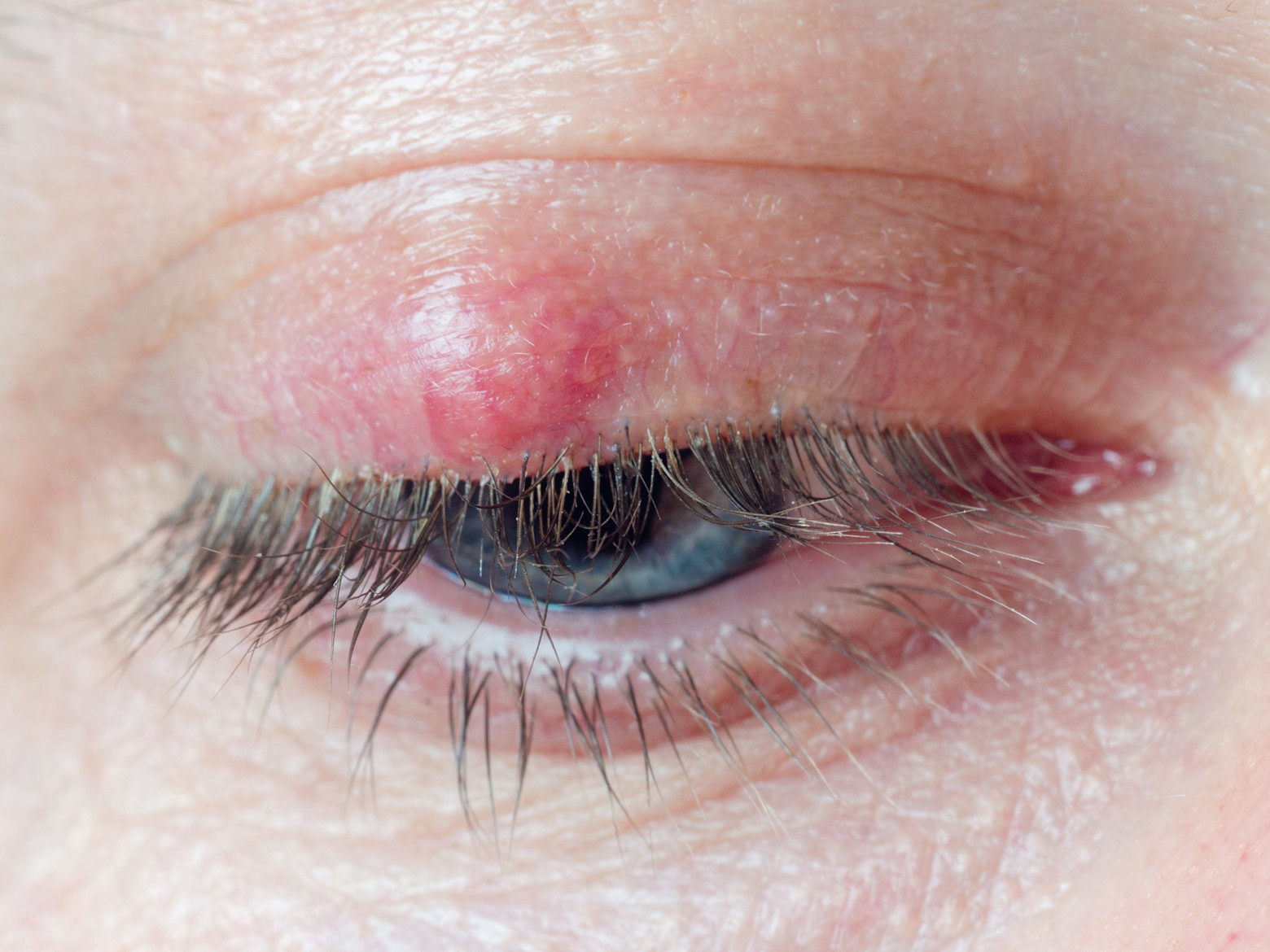
A stye (hordeolum) is a small, sore lump that forms on the edge of your eyelid. It’s usually caused by a bacterial infection in an eyelash follicle. The bacteria often come from your skin or nose and can get into your eye if you rub your face and then touch your eye.
Stye symptoms
The most obvious sign of a stye is a small lump on your eyelid – either on the edge near your lashes or tucked inside the lid. It can look like a regular spot and often comes with some swelling or discomfort. Here are other symptoms to watch out for.
Red, swollen eyelid
A stye usually starts with redness and swelling around the eyelid. The skin might look puffy and feel sore, especially near the lump. This swelling is a normal response to infection and should start to settle as the stye heals.
Tender or painful to touch
The lump itself often feels sore, especially when blinking or touching the area. This discomfort is often one of the first signs that a stye is forming. The pain should ease once the stye starts to drain and heal.
Itchy eyes
Some people with a stye notice their eyes feel itchy or irritated. This is caused by the surrounding inflammation or minor discharge from the infected area. Try not to touch or rub the eye, as this can make symptoms worse or spread the infection.
Learn more about itchy eyes
Gritty or scratchy feeling
You might feel like there’s something stuck in your eye, even though there’s nothing visible. This gritty or scratchy feeling is common with styes and is caused by the swelling or discharge irritating the eye’s surface.
Learn more about the feeling of something in the eye
Sensitivity to light
Some people become more sensitive to bright light when they have a stye. This can make going outside or looking at screens uncomfortable. The light sensitivity should improve once the swelling and irritation calm down.
Crusty eyelid
You might notice dried discharge or crust forming on the eyelid, especially after sleeping. This can make your eyelid feel sticky or hard to open in the morning. Gently cleaning the area with warm water can help.
Learn more about blepharitis
Yellow or white discharge
As the stye gets bigger, you might see a yellow or white spot appear. This is pus building up near the surface of the lump. It can burst and drain on its own – don’t try to squeeze it, as this can spread the infection.
Watery eyes
Your eye may produce more tears than usual while the stye is healing. This extra moisture helps protect the eye and flush out irritants, but it can be uncomfortable or affect your vision slightly.
Learn more about watery eyes
Lump with no pain
Not all eyelid lumps are styes. If the bump isn’t red or sore, you might have a chalazion – a blocked oil gland that tends to be firmer and longer‑lasting than a stye.
Learn more about chalazion
Blurry vision
If a stye causes a lot of swelling, it can sometimes press on the surface of your eye or block your line of sight slightly. This might make your vision feel a bit blurry or hazy. It’s not common, but if your sight changes or gets worse, speak to an optometrist.
Learn more about blurry vision
The difference between internal and external styes
External styes are the most common type. They form at the edge of the eyelid, near the base of the lashes, and often look like a red, swollen bump. They tend to come to a head and drain on their own.
Internal styes develop inside the eyelid when an oil gland becomes blocked and infected. These are usually more painful and can cause more swelling, even if they’re less visible. Both types are caused by the same bacteria and are treated in similar ways.
External stye (outside the eyelid)
This is the most common type of stye. It looks like a small, red bump on the edge of your eyelid, near your lashes. You might also spot one in the corner of your eye. It’s caused by an infection in an eyelash follicle or one of the small oil glands. External styes often come to a head and release pus, then start to heal. Most clear up within a week and don’t need treatment.
Internal stye (inside the eyelid)
This type of stye forms deeper inside the eyelid and can be more painful. It happens when the oil glands inside the lid (called meibomian glands) get blocked and infected. Internal styes might not be as easy to see, but they can cause more swelling and tenderness. They can take longer to heal and may need help from an optometrist or GP if they don’t settle on their own.
Book an eye testWhat causes a stye?
Styes are usually caused by staphylococcus – a type of bacteria that lives on your skin and in your nose. It’s harmless most of the time, but if it gets into a hair follicle or gland in your eyelid, it can cause a red, painful lump. While anyone can get a stye, some things can make it more likely.
Poor eyelid hygiene
Not cleaning your eyelids properly can lead to a build‑up of oil, dirt and bacteria. These can clog the glands in your eyelid or infect a lash follicle. Washing your face daily, including around your eyes, can help reduce the risk.
Blepharitis
This is a long‑term condition that causes your eyelids to become red, flaky and inflamed. It often affects the base of your eyelashes, where styes tend to form. If you have blepharitis, you might notice styes happening more often.
Learn more about blepharitis
Eye make‑up
Using expired, contaminated or shared cosmetics (like eyeliner or mascara) can spread bacteria to your eyelids. If you don’t remove your make‑up properly before bed, it can build up and block oil glands and raise the risk of infection.
Skin conditions
Conditions like rosacea or eczema can cause inflammation around the eyes, including the eyelids. This can make the area more sensitive and more prone to blocked glands and infection, which can lead to styes.
Diabetes
High blood sugar levels can weaken your immune response and affect how well your body deals with minor infections. This makes you more likely to get things like styes or other eye issues, especially if diabetes isn’t well controlled.
Learn more about diabetic retinopathy
A weak immune system
When your immune system isn’t working at full strength, whether due to illness, certain medications or lifestyle factors, you’re more likely to get bacterial infections, including styes.
Previous eyelid lumps
If you’ve had a chalazion before, there’s a higher chance you’ll get another eyelid lump. Chalazia form when glands get blocked, and they can sometimes get infected and turn into a stye.
Learn more about chalazion
Ready to see things clearly?
Noticed your eyes hurting, or a change in your sight? Whether it’s something new or something that’s been bothering you for a while, we’re here to help.
How do I lower my risk of styes?
It’s not always possible to stop styes completely, especially if you have blepharitis or rosacea, but good hygiene goes a long way. Always take off your eye make‑up before bed and give your face a gentle clean each night. Keeping your eyelids and lashes clean can help prevent blocked glands. There are lid wipes and cleansers made especially for this. Speak to your optometrist if you’re not sure what to use.
Everyday habits that help
Always wash your hands before touching your eyes or putting in contact lenses. Don’t rub your eyes, even if they feel itchy or sore. Use a clean towel and flannel every day, and don’t share them with others. If you get styes often, or have a firm lump that doesn’t go away, it could be a chalazion. In that case, an optometrist can take a look and recommend the best treatment.
What the experts say about styes
Our optometrists see styes all the time, so they know what to look for and how to help. In this short video, one of our experts explains what causes a stye, why it can be painful, and what you can do to ease it. They’ll also cover when it’s best to get it checked and what happens if it keeps coming back.
Book an eye testHow to treat a stye
Most styes clear up on their own within a week or two. The lump often swells, then forms a white or yellow spot as it heals. There are simple things you can do at home to help it along and signs to watch out for in case you need more support.
Relieving a stye at home
A warm compress is the safest and most effective home treatment. It helps bring the pus to the surface, so the lump can drain naturally. Use a clean flannel soaked in warm (not hot) water and hold it over your closed eye for 10–15 minutes. Do this a few times a day. Avoid squeezing the lump or trying old remedies like rubbing a gold ring on it. These won’t help and could make things worse. Stick to clean hands, gentle heat, and letting the stye heal in its own time.
When to see a doctor
If the stye is getting bigger, more painful, or not improving after a few days, it’s time to get it looked at. A doctor may need to drain it using a small needle under local anaesthetic. You might also be given an antibiotic cream or ointment. Painkillers like paracetamol or ibuprofen can ease soreness while the stye heals. Just make sure to follow the instructions on the label.
When to see an optometrist or doctor
Most styes clear up on their own, but if it’s not getting better after a week, keeps coming back, or starts to affect your vision, it’s best to get it checked. You should also speak to an expert if the swelling spreads, your eye becomes very painful, or you’re finding it hard to open. An optometrist can take a closer look and let you know if it needs treatment or if it’s something else like a chalazion or blepharitis.
Book an eye test
Things to avoid
Don’t try to pop, squeeze or poke a stye. This can make things worse and spread infection. Never pull out the affected eyelash either. Let the stye drain and heal on its own. While styes aren’t usually contagious, it’s still best to avoid sharing towels, flannels or pillowcases. Wash your hands before and after touching your eye and use a clean cloth each time you apply a warm compress. If you wear contact lenses, switch to glasses until the stye has cleared. And throw away any eye make‑up used around the time it appeared.
Why do styes keep coming back?
If you’re getting styes often, it could be due to a few things like blepharitis, rosacea or oily skin. These can cause blocked glands along your eyelid, which makes styes more likely. Some people are simply more prone to them. Keeping the area clean and spotting early signs can help stop them flaring up.
Managing styes long term
If styes are a regular problem, it’s worth building daily lid hygiene into your routine. Use a gentle eyelid cleanser or warm compress once a day to keep your eyelid margins clear. And if the issue keeps coming back despite good hygiene, book in with your optometrist. They’ll check for underlying causes and talk through treatment options.
How do I use eye drops?
If it is recommended that you use eye drops, our optometrists know that getting the hang of eye drops can take a bit of practice. We’ll show you how to do it step by step, so you feel confident using them at home. That includes tips for making it easier, like getting into the right position, not blinking too soon, and keeping things clean. If you ever have trouble or something doesn’t feel right, we’re always here to help.
Your questions about styes, answered
Styes themselves aren’t usually contagious, but the bacteria that cause them can spread. If someone with a stye shares towels, pillowcases or face cloths, it’s possible to pass the bacteria on. Wash anything that’s come into contact with the eye, and always clean your hands before touching your face.
Most styes clear up without treatment and aren’t a sign of anything serious. They can be sore and look unpleasant, but they usually heal in a week or two. If you’re getting them a lot, they’re very painful, or they start affecting your vision, speak to an optometrist.
Book an eye test
No. Never squeeze or pop a stye as this can spread the infection or make it worse. It’s best to let it drain on its own. If it bursts naturally, clean the area gently using warm water and a clean cloth. If it doesn’t improve after a couple of weeks, see an optometrist.
It’s best not to wear contact lenses while you have a stye. They can increase irritation and slow down healing. Switch to glasses until the stye has fully cleared. Make sure your lenses, case and hands are clean every time you handle them.
Learn more about contact lens hygiene
A red, swollen eyelid with a painful lump is often a sign of a stye. The swelling comes from the body’s response to a blocked or infected gland. If your eyelid is swollen, but there’s no lump or pain, it could be something else like a chalazion or blepharitis.
Most styes are caused by a bacterial infection in an eyelash follicle or oil gland. Poor eyelid hygiene, blocked glands, blepharitis, and skin conditions like rosacea can all increase the risk.
There’s no direct link between stress and styes, but stress can affect how well your immune system works. That might make you more likely to develop things like styes if bacteria get into your eye.
A stye should go away on its own in 7 to 14 days. Warm compresses can help it heal faster. If it’s still there after two weeks, or gets worse, speak to your optometrist for advice or treatment.
Book an eye test
A stye is usually painful and caused by infection. A chalazion is a firm lump caused by a blocked oil gland and often isn’t sore. Chalazia take longer to go away and may need treatment if they don’t shrink on their own.
Learn more about chalazion
Eye drops aren’t usually needed for styes. A warm compress is the best first step. If you’re prescribed antibiotic eye drops or ointment, use them exactly as directed.
Did you know?
Eye tests are bulk billed to Medicare, so there are no out‑of‑pocket expenses for you*.
Written with care and checked for accuracy

Andrea Hurlow
Healthdirect (2023) Stye. Available at: https://www.healthdirect.gov.au/stye
(Accessed: 8 December 2025)Healthdirect (2023) Eye infections (includes stye info). Available at: https://www.healthdirect.gov.au/eye‑infections
(Accessed: 8 December 2025)Healthdirect (2023) Blepharitis (stye risk from blocked glands). Available at: https://www.healthdirect.gov.au/blepharitis
(Accessed: 8 December 2025)Morey, J.N., Boggero, I.A., Scott, A.B. and Segerstrom, S.C. (2015) Current directions in stress and human immune function. Current Opinion in Psychology, [online] 5(1), pp.13–17. doi Available at: https://doi.org/10.1016/j.copsyc.2015.03.007
(Accessed: 8 December 2025)Stye (Eyelid Infection) What causes a stye? (n.d.). Available at: https://www.universityofgalway.ie/media/studentservices/healthunit/files/Stye.pdf
(Accessed: 8 December 2025)NHS Choices (2019) Stye. [online] nhs. Available at: https://www.nhs.uk/conditions/stye/
(Accessed: 9 December 2025)www.hopkinsmedicine.org.(n.d.). Hordeolum (Stye). [online] Available at: https://www.hopkinsmedicine.org/health/conditions‑and‑diseases/hordeolum‑stye
(Accessed: 9 December 2025)
Could it be something else?
Cloudy, misty or blurred vision could be a sign of cataracts, particularly in bright conditions or at night.
Astigmatism means the cornea has an uneven shape, which can blur your vision at all distances.
Long‑sightedness, or hyperopia, means you can see things in the distance more clearly than close up.
Myopia, or short‑sightedness, means you can see nearby objects clearly, but distant ones are blurry.
Glaucoma is an eye condition that can damage your optic nerve and cause vision loss if it isn’t picked up early.
If you have diabetes, it’s important to watch out for diabetic retinopathy which can cause vision changes.
Vision that looks misty or hazy could be a sign of cataracts or another eye issue that needs checking.
Double vision means seeing two images of a single object, which can happen when the eyes are not aligned or working together properly
Do your eyes feel sore, tried or gritty? Dry eye could be the cause, making vision cloudy, or as if you have filmy eyes.
This is when the edges of your eyelids become inflamed due to an infection. It can also make the whites of your eyes appear pink or red.
Learn more about blepharitis
Seeing specks, spots or sudden flashes of light? These are common – but can also be a sign of a serious eye condition. It is worth checking out if they’re new or getting worse.
A chalazion is a blocked oil gland in the eyelid that causes a firm, usually painless lump and can lead to eyelid swelling or blurred vision.
Find out more
Why do I need an eye test?
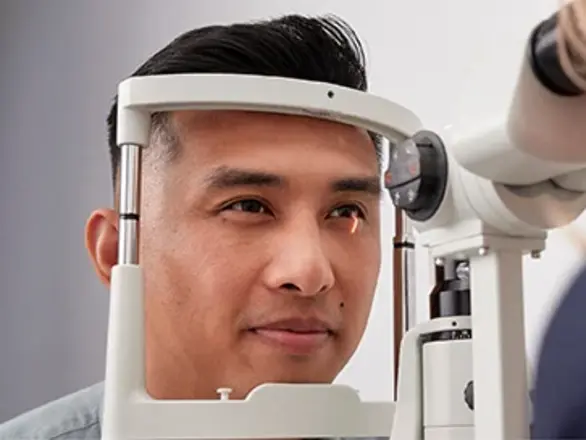
Eye tests play a huge part in making sure your eyes stay healthy.
Check your vision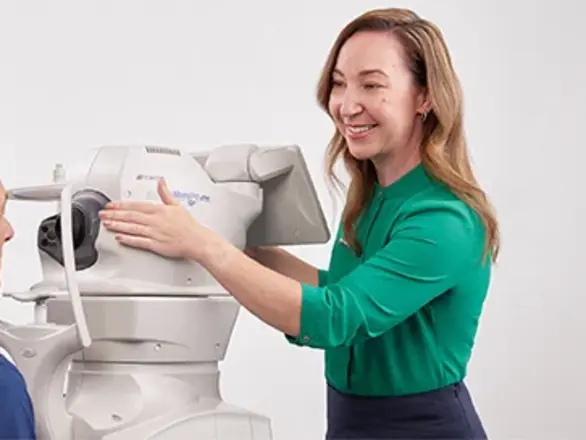
Your store visit explained
At Specsavers we are focused on caring for your eyes and giving you the best possible vision.
What to expect in‑store
More on eye tests
An eye test is not just about getting glasses – it is a vital health check for your eyes.
All about eye tests
* Listed on a valid Medicare card without Optometry restrictions.