'%3e%3cpath%20d='M706.453%20375.999C860.234%20375.999%20984.899%20291.829%20984.899%20188C984.899%2084.1703%20860.234%200%20706.453%200C552.671%200%20428.006%2084.1703%20428.006%20188C428.006%20291.829%20552.671%20375.999%20706.453%20375.999Z'%20fill='%23009B4F'/%3e%3cpath%20d='M278.447%20375.999C432.229%20375.999%20556.893%20291.829%20556.893%20188C556.893%2084.1703%20432.229%200%20278.447%200C124.665%200%200%2084.1703%200%20188C0%20291.829%20124.665%20375.999%20278.447%20375.999Z'%20fill='%23009B4F'/%3e%3cpath%20d='M141.484%20166.68C125.01%20162.158%20114.996%20158.927%20114.996%20150.529C114.996%20143.422%20122.102%20138.9%20133.085%20138.9C144.068%20138.9%20155.051%20143.099%20164.095%20150.529L164.418%20150.852L165.388%20129.855C156.666%20125.01%20147.944%20121.78%20133.731%20121.78C123.394%20121.78%20114.027%20124.364%20107.243%20129.209C99.8137%20134.378%2095.9374%20142.13%2095.9374%20151.175C95.9374%20168.941%20110.796%20176.694%20123.394%20179.924C140.192%20184.446%20151.821%20188.323%20151.821%20198.659C151.821%20207.381%20144.068%20212.872%20131.47%20212.872C118.872%20212.872%20106.274%20207.381%2096.5834%20198.013L96.2604%20197.69L94.3223%20219.979C104.336%20226.762%20116.934%20230.316%20130.501%20230.316C142.13%20230.316%20152.144%20227.408%20159.25%20221.917C167.003%20216.103%20171.202%20207.704%20171.202%20197.367C171.202%20181.862%20161.511%20171.848%20141.484%20166.68Z'%20fill='white'/%3e%3cpath%20d='M264.557%20188C264.557%20215.78%20246.467%20230.316%20225.471%20230.316C215.457%20230.316%20207.381%20226.762%20201.244%20221.271V253.896H182.186V146.976H201.244V156.02C207.704%20149.883%20216.103%20145.684%20226.763%20145.684C247.436%20145.36%20264.557%20160.22%20264.557%20188ZM245.498%20188C245.498%20172.494%20236.131%20162.158%20222.887%20162.158C214.811%20162.158%20207.058%20165.711%20201.567%20173.787V203.182C207.058%20210.288%20214.488%20213.841%20222.887%20213.841C236.131%20213.841%20245.498%20203.505%20245.498%20188Z'%20fill='white'/%3e%3cpath%20d='M352.095%20194.137H294.274C296.535%20207.058%20305.903%20213.841%20318.824%20213.841C329.807%20213.841%20337.882%20211.257%20346.604%20206.089L347.573%20222.886C339.82%20227.085%20330.13%20230.316%20317.532%20230.316C294.274%20230.316%20274.893%20215.78%20274.893%20188.323C274.893%20162.804%20294.274%20145.683%20317.209%20145.683C341.112%20145.683%20353.71%20160.22%20353.71%20181.216C353.71%20185.415%20353.064%20189.615%20352.095%20194.137ZM335.621%20178.632C335.621%20168.618%20329.161%20160.866%20317.532%20160.866C306.549%20160.866%20296.858%20168.295%20294.597%20180.893H335.298C335.621%20180.247%20335.621%20179.601%20335.621%20178.632Z'%20fill='white'/%3e%3cpath%20d='M443.189%20221.917L445.128%20203.505C452.88%20209.965%20463.54%20213.841%20474.846%20213.841C482.921%20213.841%20488.413%20210.611%20488.413%20204.797C488.413%20189.615%20444.482%20197.367%20444.482%20169.91C444.482%20153.436%20458.695%20145.36%20475.492%20145.36C487.444%20145.36%20496.488%20148.268%20503.272%20152.467L502.303%20169.587C494.227%20164.096%20484.213%20161.189%20475.492%20161.189C468.708%20161.189%20463.217%20163.773%20463.217%20168.941C463.217%20181.862%20507.471%20175.402%20507.471%20203.828C507.471%20221.271%20492.289%20229.993%20474.523%20229.993C461.602%20230.316%20450.942%20227.085%20443.189%20221.917Z'%20fill='white'/%3e%3cpath%20d='M590.488%20177.986V228.701H571.429V220.302C564.969%20226.439%20556.57%20229.993%20546.88%20229.993C528.467%20229.993%20517.484%20219.01%20517.484%20203.505C517.484%20187.03%20530.405%20177.017%20549.464%20177.017C556.57%20177.017%20563.677%20178.309%20571.752%20180.57V177.986C571.752%20165.388%20562.385%20159.897%20550.756%20159.897C542.034%20159.897%20532.02%20163.127%20524.914%20168.941L524.268%20152.467C530.405%20148.268%20541.711%20145.037%20554.309%20145.037C574.983%20145.36%20590.488%20155.374%20590.488%20177.986ZM571.429%20206.735V194.46C564.646%20192.199%20558.185%20190.907%20551.402%20190.907C541.711%20190.907%20535.574%20196.075%20535.574%20203.505C535.574%20210.934%20542.034%20215.78%20550.433%20215.78C558.508%20215.78%20564.969%20212.872%20571.429%20206.735Z'%20fill='white'/%3e%3cpath%20d='M592.104%20146.976H612.777L636.358%20198.659L659.616%20146.976H680.289L641.526%20228.701H630.866L592.104%20146.976Z'%20fill='white'/%3e%3cpath%20d='M754.907%20194.137H697.409C699.67%20207.058%20709.038%20213.841%20721.959%20213.841C732.941%20213.841%20741.017%20211.257%20749.739%20206.089L750.708%20222.886C742.955%20227.085%20733.264%20230.316%20720.667%20230.316C697.409%20230.316%20678.027%20215.78%20678.027%20188.323C678.027%20162.804%20697.409%20145.683%20720.343%20145.683C744.247%20145.683%20756.845%20160.22%20756.845%20181.216C756.522%20185.415%20756.199%20189.615%20754.907%20194.137ZM738.756%20178.632C738.756%20168.618%20732.295%20160.866%20720.667%20160.866C709.684%20160.866%20699.993%20168.295%20697.732%20180.893H738.433C738.433%20180.247%20738.756%20179.601%20738.756%20178.632Z'%20fill='white'/%3e%3cpath%20d='M826.618%20148.914L824.034%20166.357C819.511%20163.773%20814.989%20163.127%20810.467%20163.127C802.068%20163.127%20794.315%20167.326%20788.824%20176.371V228.701H769.766V146.976H788.824V157.958C794.315%20150.529%20802.068%20145.36%20812.728%20145.36C817.896%20145.36%20822.418%20146.653%20826.618%20148.914Z'%20fill='white'/%3e%3cpath%20d='M832.109%20221.917L834.048%20203.505C841.8%20209.965%20852.46%20213.841%20863.766%20213.841C871.841%20213.841%20877.333%20210.611%20877.333%20204.797C877.333%20189.615%20833.401%20197.367%20833.401%20169.91C833.401%20153.436%20847.615%20145.36%20864.412%20145.36C876.364%20145.36%20885.408%20148.268%20892.192%20152.467L891.223%20169.587C883.147%20164.096%20873.133%20161.189%20864.412%20161.189C857.628%20161.189%20852.137%20163.773%20852.137%20168.941C852.137%20181.862%20896.391%20175.402%20896.391%20203.828C896.391%20221.271%20881.209%20229.993%20863.443%20229.993C850.522%20230.316%20839.862%20227.085%20832.109%20221.917Z'%20fill='white'/%3e%3cpath%20d='M429.298%20206.412C422.838%20211.257%20416.054%20213.841%20408.302%20213.841C395.058%20213.841%20383.429%20204.474%20383.429%20188C383.429%20171.525%20395.058%20162.158%20408.302%20162.158C416.054%20162.158%20422.838%20164.742%20429.298%20169.264C430.268%20163.45%20431.237%20157.958%20432.852%20152.467C426.068%20148.591%20417.67%20145.683%20406.041%20145.683C382.783%20145.683%20363.725%20161.512%20363.725%20188C363.725%20214.487%20382.783%20230.316%20406.041%20230.316C417.67%20230.316%20426.068%20227.085%20432.852%20222.886C431.237%20217.395%20429.944%20211.903%20429.298%20206.412Z'%20fill='white'/%3e%3c/g%3e%3cdefs%3e%3cclipPath%20id='clip0_1478_9029'%3e%3crect%20width='984.9'%20height='375.999'%20fill='white'/%3e%3c/clipPath%3e%3c/defs%3e%3c/svg%3e)
Laser eye surgery overview
Laser eye surgery is a very common procedure that can permanently improve your vision. Thousands of Australians have this kind of eye surgery every year. While Specsavers doesn't offer laser eye surgery, we can provide an initial eye exam and refer you to specialists. Learn more in our guide.
What is laser eye surgery?
Laser eye surgery is a very effective method for treating vision problems called ‘refractive errors’. It’s commonly used to correct short‑sightedness (myopia), long‑sightedness (hyperopia), and astigmatism (caused by an irregularly shaped eye). First developed in the 1980s, it has helped millions of people around the world have much clearer vision. For some refractive errors, it provides an alternative to glasses or contact lenses. This procedure is typically not covered by Medicare (except in rare situations), meaning you would usually need to pay for it yourself. Laser surgery will not correct presbyopia, so you will still need near vision correction with glasses/contacts from around 40‑45 years old.
How does laser eye surgery work?
There are a few kinds of laser eye surgery available in Australia ‑ we’ll look at them in more detail below. All of them use a laser (a highly concentrated beam of light) to reshape the cornea. The cornea is a clear, dome‑shaped layer at the front of the eye that covers the iris and lens. During the operation, the laser burns off small amounts of corneal tissue to change its shape.
Why does the cornea's shape need to be changed?
For a person to see an object, light must reflect off it and travel through their cornea. It then reaches the back of the eye, where the retina converts the light into electrical signals. These signals are sent to their brain, which processes them into images that people see.
In an eye with perfect vision, the cornea focuses light directly onto the retina. But if the cornea is too flat, too pointed, or has an irregular shape, it affects how light reaches the retina, causing issues like short‑sightedness or long‑sightedness. Laser eye surgery reshapes the cornea to correct these problems.
Learn more about astigmatism.
Getting your vision checked
If you're finding it hard to see things near or far away, the most important first step is to find out the underlying cause. Specsavers optometrists are highly skilled and can diagnose all kinds of sight problems. We can also tell you whether your vision can be improved with laser eye surgery.
Book an eye testTypes of laser eye surgery in Australia
There are several kinds of laser eye surgery available in Australia. Each method uses lasers, but they reshape the cornea in slightly different ways. The surgeon at the clinic will decide which type is most suited to your particular sight problems.
LASIK eye surgery
This is the type most people get. The surgeon uses a laser to make a flap on the surface of your cornea, which is lifted. A second laser reshapes the tissue below. The flap is then smoothed down.
Surface laser treatments (PRK and TransPRK)
These methods use a single laser to directly reshape the top layer of the cornea. They're just as effective as LASIK, but can make the outer surface of the eye feel sore during recovery.
Lenticule extraction (SMILE, CLEAR, SmartSight, SILK)
This is the latest development in laser eye surgery. Lasers are used to slice into the side of the cornea, then a disk‑shaped piece of cornea called a lenticule is removed to correct your vision.
LASEK eye surgery
Alcohol is used to remove the outermost layer of the cornea, then a laser reshapes the cornea below. The outer layer ('epithelium') then needs to grow back after.
Book an eye testIntraocular lens (IOL) surgery
IOL surgery is another kind of eye surgery that can significantly improve sight. It's different to laser eye surgery, because it doesn't use laser. Instead, a small incision is made into your eye and the lens is removed. The surgeon implants an artificial lens that helps you see better. IOL is the main treatment for cataracts. It's also a good option for people who can't have laser eye surgery.
Learn more about cataracts
Who should and should not get laser eye surgery?
If you have refractive errors like short‑sightedness, long‑sightedness or astigmatism, laser eye surgery could be a good option for you. However, it's not the right solution for everyone.
The good news is that, even if laser eye surgery isn't suitable for you, there are other ways of managing sight issues. These include contact lenses and glasses.
Who is laser eye surgery right for?
Millions of people around the world have benefited from laser eye surgery. It could be a good option for you if:
You're an adult
In Australia, you can only normally get laser eye surgery if you're aged 18+. But your eyes may keep changing up until 25, so you need to be sure your vision is stable before getting the procedure.
Your prescription has been stable for at least two years
If your prescription changes often, it means your vision isn't stable. Laser eye surgery modifies your cornea. But if your body changes the cornea's shape again, this is likely to 'undo' the surgery.
You have myopia, hyperopia or astigmatism
Eye laser surgery is only suitable for treating these three kinds of refractive errors. It's not useful for people who need reading glasses (presbyopia).
Learn more about presbyopia.
Book an eye testWho should not have laser eye surgery?
Laser eye surgery isn’t a good option for everyone. If you’re unsure whether it’s right for you, speak to an optometrist at your local Specsavers store. They can offer impartial advice based on your eye health. Laser eye surgery isn’t recommended if:
Your vision is not stable
Lots of things can change your vision, including puberty, pregnancy, menopause, or getting older. Your vision needs to be stable for at least two years before having eye laser surgery.
You live with certain health conditions or take certain medications
A few health conditions might mean you can't have laser eye surgery, including immune disorders and HIV. Some medication (such as for acne) might also mean you can't get eye laser surgery.
You have other eye health issues
There are a few eye conditions that might prevent you from having laser eye surgery. These include an inflamed cornea, uveitis, eye herpes, cataracts, glaucoma, keratoconus, and thin corneas, among others.
How much does laser eye surgery cost?
Laser eye surgery is not normally covered by Medicare, so you'll need to pay for it yourself. Standard LASIK eye surgery costs in Australia typically start around $2,500 per eye. The price of laser eye surgery can depend on the type of surgery, location, the surgeon's experience and added extras. You might have to pay for the initial consultation too. Always ask for a detailed breakdown of all fees.

Advantages and disadvantages of laser eye surgery
Like any kind of medical procedure, laser eye surgery comes with pros and cons.
Pros of laser eye surgery
If you find wearing glasses or contact lenses annoying or uncomfortable, laser eye surgery means you can see well without them. Laser eye surgery is viewed as safe, predictable and effective. Most operations lead to big improvements in vision ‑ and many people end up with good 20/20 vision without the need for glasses. Most Australian clinics report success rates of 99% and above.
Drawbacks of laser eye surgery
One of the biggest barriers to laser eye surgery is cost. While a pair of glasses can give you good vision for as little as $39, eye surgery costs well over $5000. If you don't live in a big coastal city, you'll have to travel far for treatment and aftercare. Your eyes may feel sore afterwards, and recovery can take weeks. And while most people are very happy with the outcomes, success isn't guaranteed.
Risks and potential side effects of laser eye surgery
Like all medical procedures, laser eye surgery comes with certain risks and side effects. Your surgeon should explain them to you. The points below aren’t meant to dissuade you from having eye laser surgery ‑ the vast majority of operations are highly successful, and patients are normally very pleased with the results. But, it’s still important to be fully informed before going ahead.
Short‑term sight issues
For a few weeks or even months after laser eye surgery, you may experience blurred vision and light scattering (such as glare, halos, floaters and starbursts) until your eyes fully heal.
Eye discomfort
You're likely to get sore and dry eyes for up to a few weeks after the surgery. Some people get harmless red patches on the whites of their eyes for a few days ‑ you may dislike how this looks.
Repeated surgery
You may need to go for more than one operation to fine tune your sight ‑ which can be very inconvenient. The surgeon may also over‑ or under‑correct your vision, which will need further surgery to fix.
Sight loss and other issues
Serious injuries with laser eye surgery are extremely rare. Nonetheless, a tiny number of people have experienced permanent loss of vision or medical emergencies such as retinal detachment.
Learn more about retinal detachment
Eyesight can regress
It's fairly rare, but some people find that their previous refractive problems return within just a few years of having the surgery. This can be very frustrating after paying thousands of dollars for the surgery.
Finding a trustworthy laser eye clinic
Australia's laser eye surgery clinics are some of the best in the world. However, there have been some rare instances of underqualified surgeons doing the procedure and harming patients.
Once you've found a provider, check the surgeon is listed on the Medical Register of Australia. Ask to see their laser eye surgery certificates, insurance papers, and recent customer testimonials.
Laser eye surgery: preparation, procedure and post‑surgical care
If you've decided to get laser eye surgery, you're probably feeling excited about how it will improve your vision, but also nervous about the procedure itself. Your surgeon should give you a clear explanation of everything that's going to happen and how to prepare. Here's what to expect before, during and after the surgery.
Initial consultation
The surgeon will carry out a thorough eye examination and review your medical history. They will measure the shape of your cornea and work out which areas need reshaping. A special scanner will be used to create a detailed ‘map’ of your cornea’s surface.
During this consultation, the surgeon should also explain how to prepare for the procedure. It’s a good opportunity to ask any questions you have ‑ remember there are no ‘stupid’ questions. At this stage, you should also ask for a clear breakdown of all the costs and fees, including aftercare.
Getting ready for the operation
There isn't much you need to do to prepare for your surgery. Avoid wearing eye makeup for at least a day before the operation. Try and get a good night's sleep. You can usually eat and drink on the day of the operation, and you can have any medication you normally take (always let the surgeon know what you've taken).
During the surgery
In Australia, most people get LASIK surgery, although other techniques may be used. Whichever type you get, the process is quite similar. You’ll lie back in a reclining chair, and anaesthetic eye drops will be used to numb your eyes. A clip will hold your eyelids open, and a suction ring may be used to stop your eye from moving. You’ll be asked to focus on a light above you. If you feel any discomfort, anxiety, or the urge to blink, you can let the surgeon know. They may also offer medication to help you relax.
The procedure itself typically takes less than 30 minutes for both eyes. Using a software‑guided eye laser, the surgeon will carefully remove and reshape parts of the cornea. You may notice a burning smell, similar to singed hair.
Recovering from eye laser surgery
Your vision will probably be blurry for a few hours or even days after the operation. This might be concerning, but it doesn't mean the operation wasn't a success. Most people need some time before they notice the improvement in their vision. It can take up to a couple of months for your eyes to fully heal after eye surgery.
You will probably feel some soreness, grittiness and discomfort in your eyes after the operation. You can take over the counter pain medication for this. You might also be given eye drops and antibiotics which you should use as instructed. It's not safe to drive the day of the surgery, so you should organise transport home.
You will normally have a follow‑up appointment with the surgeon a couple of days later, and may also need to go for further checks.
Laser eye surgery FAQs
In Australia, the cost of laser eye surgery is usually around $5000 for both eyes, but can be quite a bit more. The price may vary depending on where you get the operation done, the type of surgery, insurance, added extras and any follow ups you require.
Laser eye surgery operations are usually quite quick. For most people, the entire procedure (both eyes) is finished within 20‑30 minutes.
LASIK eye surgery is the most widely used type of laser eye surgery. It stands for 'laser in situ keratomileusis'. In the procedure, one laser creates a flap on the outer surface of your cornea, which is then lifted. A second laser then reshapes the tissue in the cornea below. The top 'flap' is then smoothed back down and reattaches on its own. One of the big benefits of LASIK is that the outer layer of the cornea remains in place. This means you experience less irritation and soreness during recovery, compared to types of laser eye surgery that burn off the top layer of the cornea.
No, you shouldn't drive after laser eye surgery. Your vision is likely to be blurry immediately after the operation, and you may be affected by any medication you've been given. Arrange for someone to drive you home from the clinic or book a taxi.
If your operation is successful (and the vast majority are), then you shouldn't need to wear glasses any more after laser eye surgery. However, it won't mean you never need them again. Your cornea could change in a few years, which will make glasses necessary again. Also, you will develop presbyopia as you get older, which is when the lens in your eye becomes less flexible (laser surgery changes the cornea, not the lens), meaning you'll need reading glasses.
Learn more about presbyopia
Most people who've had laser eye surgery say they're very happy with the results. If you've had vision problems for many years, this kind of surgery can really enhance your quality of life. Ultimately, deciding whether it's worth it is down to you. Some people will look at the costs (often $5000 or more), the slight chance of permanent eye damage, plus recovery time and decide it's not right for them. After all, glasses or contacts are far cheaper and come with no health risks at all. But other people find glasses/contacts really inconvenient. They don't like how they look, often break or lose them, or just find them annoying. Never having to think about them again can be very appealing.
Yes, laser eye surgery is a permanent procedure. The laser physically changes the shape of your cornea and its effects are long‑lasting. That being said, your eyes will continue to change as you get older, and so your sight could still change too. Later in life, you may need to start wearing glasses again.
No, laser eye surgery is not covered by Medicare, except in very rare circumstances. It is an elective treatment, meaning it's not seen as necessary for your health (a bit like cosmetic surgery).
Did you know?
Eye tests are bulk billed to Medicare, so there are no out‑of‑pocket expenses for you*.
Written with care and checked for accuracy

Acyel Al‑Alosi
Bamashmus, M., et al. (2015) Functional Outcome and Patient Satisfaction after Laser In Situ Keratomileusis for Correction of Myopia and Myopic Astigmatism Available at: https://pmc.ncbi.nlm.nih.gov/articles/PMC4302464/
Health Direct (2024) Laser Eye Surgery. Available at: https://www.healthdirect.gov.au/laser‑eye‑surgery
Mayo Clinic (2025) LASIK eye surgery Available at: https://www.mayoclinic.org/tests‑procedures/lasik‑eye‑surgery/about/pac‑20384774
Rai‑Roche, S. (2018) Refractive surgery survey 2018. Available at: https://www.opticianonline.net/content/features/refractive‑surgery‑survey‑2018
WebMD (2023) A guide to refractive and laser eye surgery. Available at: https://www.webmd.com/eye‑health/overview‑refractive‑laser‑eye‑surgery
Find out more
Why do I need an eye test?
Eye tests play a huge part in making sure your eyes stay healthy.
Check your vision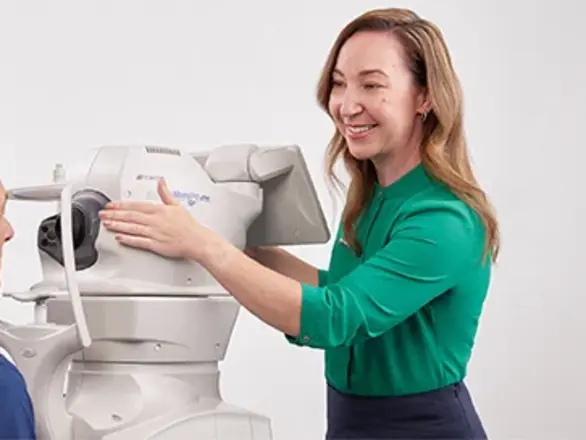
Your store visit explained
At Specsavers we are focused on caring for your eyes and giving you the best possible vision.
What to expect in‑store
More on eye tests
An eye test is not just about getting glasses – it is a vital health check for your eyes.
All about eye tests
* Listed on a valid Medicare card without Optometry restrictions.