Dry eye is a very common condition in Australia. Learn about dry eye symptoms, causes, diagnosis and treatment options.
Understanding dry eye syndrome
Dry eye syndrome is a condition that makes eyes feel sore, uncomfortable and itchy. When your eyes are healthy, the tears are evenly spread across the surface. Dry eye happens when your eyes don’t produce enough tears or there are problems with tear quality.
How do your eyes make tears?
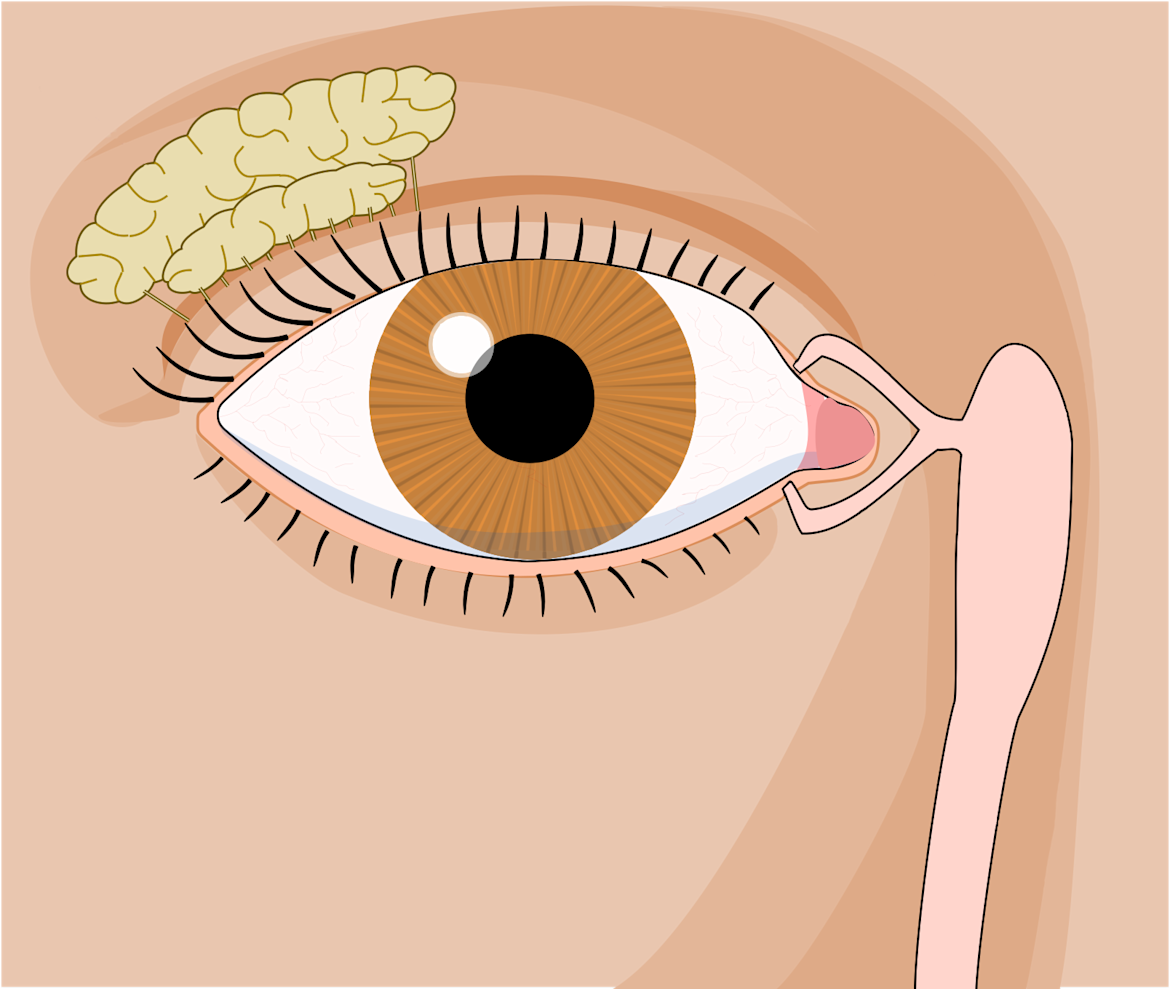
Tears are made of three 'layers'. Here's how your eye makes them.
1 of 4
Lacrimal glands
The lacrimal glands produce aqueous part of your tears. They mainly consist of salt and water. Problems with the lacrimal glands mean you don't produce enough tears.
2 of 4
Meibomian glands
This gland is found in your eyelids. It produces an oily layer that helps prevent tear evaporation. Any issues or blockages with the meibomian gland can mean that not enough of this oil gets into your tears.
3 of 4
Mucin glands
Mucin creates surface tension, helping the tears to adhere to the surface of the eye. If there's not enough mucin, the tear won't stay in place.
4 of 4
Tear ducts
Old tears drain away from the eye via the tear ducts on either side of your nose.
Defining dry eye syndrome
Dry eye syndrome is a very common condition that happens when your eyes don't produce tears. There are usually a few things that contribute to it.
Dry Eye Syndrome is a general term people use to describe dry eyes. But you might hear your optometrist use other terms like dry eye disease, ocular surface disease, dysfunctional tear syndrome, and keratoconjunctivitis sicca.
Over three‑quarters of Australians have experienced dry eye in their lives, according to the Optometry Australia. It's an issue we often see in our stores.
Types of dry eye syndrome
Dry eye syndrome usually falls into one of the following two categories (though it may be a mix). An optometrist can figure out what's causing your dry eyes.
Evaporative dry eye
This happens when your tears dry out too quickly, often due to blocked meibomian glands. Without enough oil, tears don’t stay on the eye. It can be made worse by air con, screens or contact lenses.
Aqueous deficiency dry eye
This type happens when your eyes don’t make enough watery tears. It’s less common and often linked to age, health issues or medication. Your eyes may feel dry, sore or tired.
Other factors that can contribute to dry eye
Dry eye symptoms can also be influenced by anomalies with the eyelids, the surface of the eye, or ongoing inflammation. These factors can affect how tears work and may make your eyes feel dry, irritated, or uncomfortable.
Ready to see things clearly?
Noticed your eyes hurting, or a change in your sight? Whether it’s something new or something that’s been bothering you for a while, we’re here to help.
Our expert optometrists see people with dry eye syndrome every day. Here, one of our optometrists talks about what to look out for, what to expect during an eye test, and what kinds of treatment are available.
There are many reasons why you might develop dry eye syndrome. Often, it's a mix of things coming together. Here are some of the common causes our optometrists see every day.
Meibomian gland dysfunction
When the oil glands located in the eyelids are blocked, the oil layer is missing or insufficient, so tears evaporate too quickly and dry out the eyes.
Blepharitis
Blepharitis is an inflammation of the eyelid that can be caused by an infection. It may disrupt the glands responsible for producing parts of the tear film. Learn more about blepharitis
The ageing process
As we get older, our eyelids don’t spread tears across the eyes as well when blinking and the glands which supply the layers of our tears can become less efficient.
Contact lens dry eyes
Contact lenses can cause dry eye by disrupting the normal action of the tear film on the surface of your eye.
Dry eyes caused by screen usage
Staring at a screen (such as a computer monitor) for a prolonged time can cause dry eye. People tend to blink less often when using computers, so their eyes don't stay as lubricated. Learn more about computer eye strain
Air conditioning
Air conditioning is one of the more common dry eye syndrome causes in Australia, especially during the summer. Air conditioners work by removing moisture from the air, which can make eyes become drier.
Dry, hot and windy environments
In a similar way to air con, hot, windy or dry environments (such as at the beach or arid parts of the Outback) might make your tears evaporate faster, causing dry eyes.
Recovering from surgery
Some people notice they get dry eye syndrome after certain kinds of eye surgery, such as cataract surgery. Learn more about cataracts
Other health issues
A few medical conditions can cause dry eye syndrome, including diabetes, rheumatoid arthritis or Sjögren's syndrome.
Medication side effects
Certain medications, such as antihistamines, blood pressure medications or birth control pills, can cause dry eyes as a side effect.
Hormonal changes
Changes in oestrogen levels can cause hormonal dry eye, which is common during menopause.
How is dry eye syndrome diagnosed?
If you’re having symptoms of dry eye syndrome, your optometrist will start by asking about how your eyes feel, when the symptoms began, and whether anything seems to make them better or worse. This helps build a clearer picture of what might be going on.
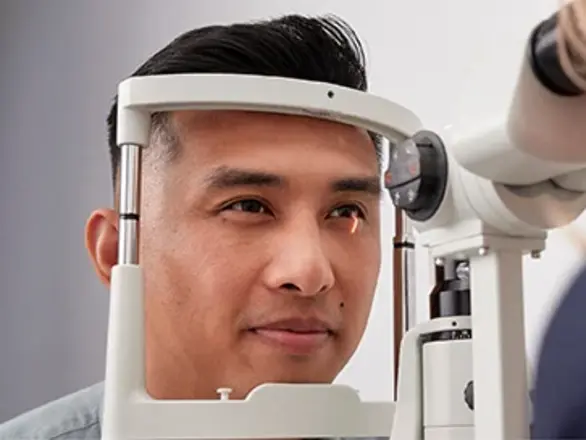
They’ll then carry out a few simple tests to examine your eyes in more detail. One common method is a slit lamp examination. This involves a special microscope with a bright light that lets the optometrist check the surface of your eye closely. They may also use a dye, such as fluorescein, which shows up under the light and helps reveal any damage or dryness on your cornea.
Your tear quality and quantity will also be assessed. A Tear Break‑Up Time test checks how long your tears stay in place before they start to break up. For this, a small amount of dye is added to your eye, and you’ll be asked to blink while the optometrist observes what happens under the slit lamp. Another method is the Schirmer’s Test, which uses a small strip of paper placed on your lower eyelid to measure how much moisture your eye produces over a few minutes. These tests help confirm what kind of dry eye you have and how severe it is.
Increasing amounts of screen use is a real concern as it's believed to be a major cause of dry eye syndrome. According to experts up to 80% of children in Australia experience computer eye strain symptoms such as dry eye.
So what is it about screens that has this effect on the eyes? To start with, when concentrating on screens for extended periods of time, your blink rate reduces, or you don’t blink fully. This means that the eye’s surface isn’t regularly being replenished and moisturised with tears. It also means your eyes are exposed longer to the air, evaporating the tears quicker. If you work with an office with air conditioning, this can further dry out the eyes.
Headaches associated with screen usage are more related to the muscles in the eyes working too hard when concentrating on the screen. They might also be battling with glare or reflections from screens, which puts extra pressure on the eyes to get a clear image.
Intense Pulsed Light (IPL) and Low‑Level Light Therapy (LLLT) treatment
At Specsavers, we now offer dedicated dry eye clinics in many of our stores across Australia. These clinics provide access to a new treatment service for dry eye, including options like IPL (intense pulsed light) and LLLT (low‑level light therapy), depending on what’s right for you.
Our optometrists are highly trained and will tailor a treatment plan based on the type and cause of your dry eye. This could include in‑store treatments like IPL and LLLT, special eye drops, or changes to your daily routine accompanied by lifestyle and environmental modifications.
Dry eye drops or artificial tears can help relieve the discomfort of dry eyes and reduce irritation and dry eyes by lubricating the eye surface and stabilising the tear film.
Eyelid cleansing
Eyelid wipes and foam cleansers can help prevent and ease symptoms of eye conditions like blepharitis. They’re also useful for people with allergies, as they can remove pollen or other allergens from around the eyes.
Heat Based Treatments
Applying heat with a warm compress or heated eye mask gently opens the meibomian (oil) glands in your eyelids. This helps the natural oils flow more easily into your tears, keeping the tear film stable and reducing evaporation—so your eyes feel more comfortable.
Many reusable heated masks are available. Always follow the manufacturer’s instructions.
Steps for use of heat mask
Heat the mask. Microwave for 20–25 seconds (time may vary depending on microwave power).
Check the temperature. Always test the mask with your fingers before applying to your eyelids.
Apply the mask. Place the mask over closed eyes for about 10 minutes, or as advised by your eyecare professional.
Remove the mask.
Massage your eyelids. With clean hands and closed eyes, gently massage your eyelids for about 30 seconds per eye, applying light pressure toward your eyelashes. This helps express the oil from the glands.
Note: The mask may stay warm for up to 30 minutes. If reheating within this time, reduce the heating duration.
Warm compress
Warm compresses are commonly used in the management of Meibomian Gland Dysfunction (MGD) to soften and liquefy thickened meibum within the glands. This step can be followed by gentle manual massage, to encourage more effective gland expression.
Warm Compress Instructions
Frequency:Apply at least once daily for 10 minutes, or twice daily for 5 minutes each time.
Soak a clean cotton cloth in warm water. Ensure the water is comfortably warm, not overly hot to cause burns.
Gently squeeze out excess water.
Fold the cloth until it is small enough to cover your eyes.
Place the warm, damp cloth over your closed eyelids and hold it in place for 2–3 minutes.
If needed, reheat the cloth and reapply for an additional 20–30 seconds.
After the compress, gently massage the base of your eyelashes using your fingertips.
The cloth should remain warm for approximately 5–10 minutes in total.
Supplements for Dry Eyes
Nutritional approaches for managing dry eye are an emerging area of research, with numerous new studies currently underway. A balanced diet is always recommended, and supplements should only be used to complement your diet. Evidence suggests that certain nutritional supplements may help reduce dry eye symptoms by supporting overall eye health and tear function.
Omega‑3 Supplementation
Omega fatty acids have been widely studied for their potential benefits in dry eye. Although research is ongoing, Omega‑3 fatty acids are believed to help reduce inflammation on the eye surface and are suggested to improve meibomian gland function. A study by Jo & Lee found that omega‑3 dietary supplements improved tear break‑up time (TBUT) and meibomian gland dysfunction (MGD) scores.
A range of supplements is available. Some common ones include:
Lacritec® and TheraTears® Eye Nutrition
Important: Always read the nutrition label carefully and take supplements only as advised by your healthcare professional. Do not make significant dietary changes without consulting your doctor.
Additional treatment for dry eyes
Most cases of dry eye aren’t emergencies, but there are situations where you should seek care right away. If you develop extreme sensitivity to light (photophobia), very red and painful eyes, a change in your vision, or feel generally unwell, seek medical advice immediately as it could be a sign of a more serious complication.
Clean your eyelids
Daily cleaning with lid wipes, foams or scrubs helps remove bacteria, oil and debris that can block glands and cause dry eye.
Managing underlying medical conditions
If your dry eye syndrome is caused by a medication you’re taking or an underlying medical condition, you should discuss this with your GP.
Contact lens related issues
If you wear contact lenses, taking a break or switching lens type may help. You can also use dry eye drops that are safe for contact lenses before and during wear. Read our contact lens guide
Diet and lifestyle changes
Staying hydrated and cut down on smoking and alcohol, as both can make dry eyes worse. A diet rich in Omega‑3, or taking Omega‑3 supplements, may also help.
Surgery for dry eye syndrome
In more severe cases, surgery may be an option if other treatments haven’t helped. This might involve blocking the tear ducts to stop tears draining too quickly, or treating the Meibomian glands to improve oil flow.
If dry eye syndrome surgery is necessary, we’ll explain your options and refer you to an ophthalmologist for further care.
If dry eye syndrome surgery is necessary, we’ll explain your options and refer you to an ophthalmologist for further care.
As well as helping with dry eye symptoms, some of our dry eye drops contain no preservatives. This means they don't interfere with the delicate structure of your tear film. Some of them are also contact lens‑friendly, so you can use them while you’re wearing your contacts.
Which dry eye drop is right for you?
There are different types of dry eye drops to suit different levels of dry eye. Have a chat with our team in‑store ‑ they can recommend the right type for you depending on your symptoms.
If you have any concerns about your eye health, get in touch with your local store, even if you don’t have an appointment.
Drops usage can vary between once to twice a day to up to four times a day. Your Optometrist will determine how frequently you should use the eye drops.
Instillation of eye drops
Steps:
1.
Wash your hands with soap and water.
2.
Open the eye drop bottle. Avoid touching the dropper tip.
3.
Tilt your head back and gently pull your bottom eyelid down.
4.
Hold the bottle upside down with your other hand and gently squeeze so one drop falls into the inner part of your lower eyelid.
5.
Close your eyes gently (do not squeeze them shut) and keep them closed for at least 1 minute.
6.
Press lightly on the inner corner of your eye (near your nose) for about 1 minute. This helps keep the drop in your eye and stops it from draining into your nose.
7.
Wipe away any excess with a clean tissue.
8.
Wash your hands again after you finish.
Please Note: If you need to use more than one type of eye drop, wait 5–10 minutes before putting in the next drop.
Some eye drops may require a different method of instillation due to their unique bottle design or delivery system.
Please read and follow the instructions provided with your medication carefully to ensure correct use and maximum effectiveness.
If you are unsure about the technique, ask your pharmacist or eye care professional for guidance.
Dry eye syndrome is a common issue in Australia, and most people get it at some point. Here are some precautions you can take to reduce the chances of it happening.
Drink enough water
Staying hydrated can help your body to keep producing enough high‑quality tears.
Take breaks from screens
We recommend the 20‑20‑20 rule, where you take a break from looking at your screen every 20 minutes, for 20 seconds look at something 20 feet away.
Use contact lenses correctly
If you wear contacts, follow lens care instructions in the packaging and contact your optometrist if you notice your eyes becoming dry.
Dehumidify your space
Some people find that humidifiers can help with managing dry eye syndrome.
Avoid air‑conditioned spaces
Try to reduce the amount of time you spend in air‑conditioned environments.
Your optometrist may give you eye drops to lubricate your eyes, or you could need medication to reduce inflammation. If necessary, advance dry eye treatments such as IPL and Low Level Light Therapy (LLLT) can be performed or a referral for surgery can be initiated.
If dry eye is caused by an underlying condition, treating this condition will usually help relieve the symptoms. If necessary, the optometrist may refer you for further tests.
It can be concerning if you get diagnosed with dry eye syndrome. For some people, dry eye can be temporary and you'll be back to normal soon if it's treated early. But for others it can become chronic (long‑lasting). Often it can come and go in certain situations and throughout your life.
As more people work from home, many of us are noticing we get dry eye more often. Think about some changes you can make to your home office. The 20‑20‑20 rule, where every 20 minutes, for 20 second, you look at something 20 metres away, really helps. Keeping hydrated is also beneficial, and some people choose to invest in humidifiers for their home offices.
Yes, drinking water can help reduce dry eye symptoms but it will not cure it. When you’re dehydrated, your body tries to keep as much fluid in the body as it can and in doing so it prioritises the needs of the vital organs. When dehydrated, it can lead to reduced tear production – By staying hydrated, your body can keep producing the tears your eyes need to stay healthy.
To use eye drops for your dry eyes, check the packaging for instructions. Start by washing your hands with soap and water. You tilt your head back, then gently pull down the skin just below your eyelid with one hand. With the other hand, gently squeeze the eye drop bottle until a drop lands on the front of your eye. You should then blink a few times to get the artificial tear to spread across your eye.
It's always best to follow the instructions on the packaging. But if you've lost the instructions, most eye masks for dry eyes are fairly simple to use.
Always check with an eye care professional, as the right treatment depends on what’s causing your dry eyes. In the meantime, artificial tears (lubricating eye drops) can help keep your eyes moist and relieve discomfort.
If you notice you often get dry eyes when you wake up, you may wish to make some changes to your bedroom. If you use air conditioning, consider turning it off at night, as this can contribute to dry eyes. Some people find it helpful to use a humidifier in their bedroom. You may also find it useful to use a heated eye mask for dry eyes before you go to sleep. Wear it for just a few minutes before bedtime.
Tears play a key role in keeping your eyes healthy. They moisturise the surface, help protect against infection, clear away debris and keep your vision clear. A normal tear film has three layers: the mucin layer, which helps tears stick to the eye; the aqueous (water) layer, which nourishes and protects; and the lipid (oily) layer, which stops the tears from evaporating. If any of these layers aren’t working properly, it can upset the balance of your tear film. For example, if the oily layer is reduced, your tears may dry out too fast. If there’s less of the watery layer, you won’t produce enough tears to keep your eyes comfortable.
Dry eyes and headaches often show up at the same time, but it’s still not clear whether one causes the other, or if they’re both symptoms of something else. Studies suggest that people who get headaches or migraines are more likely to have dry eye too. But there’s still more research needed to fully understand the link. One likely connection is screen time. Both dry eyes and headaches are common signs of digital eye strain. With so many of us using screens every day, it’s no surprise these symptoms often come as a pair.
Did you know?
Eye tests are bulk billed to Medicare, so there are no out‑of‑pocket expenses for you*.
Dr Ambhruni Padhye graduated from the University of Melbourne with a Bachelor of Science(Honours) and Doctor of Optometry. She has a background in clinical research and extensive experience practising full scope optometry. She has worked as an Optometrist in various Specsavers stores across both metropolitan and regional Victoria and has held positions at the Centre for Eye Research Australia (CERA) and National Vision Research Institute (NVRI).
In her current role within the Clinical Services team, Ambhruni supports Specsavers Optometrist across Australia and New Zealand in various clinical governance and professional services matters. She also contributes to new clinical initiatives aimed at enhancing patient outcomes.
Asuman Celikbilek, Mehmet Adam (2015) The relationship between dry eye and migraine. Available at: https://pubmed.ncbi.nlm.nih.gov/25231463/ (Accessed: 5 November 2019)
3.
Bengu E Koktekir, Guner Celik, Aylin Karalezli, Ali Kal (2012) Dry eyes and migraines: is there really a correlation? Available at: https://pubmed.ncbi.nlm.nih.gov/22710496/ (Accessed: 6 November 2019)
4.
NCBI (2015) Chronic migraine is associated with reduced corneal nerve fiber density and symptoms of dry eye. Available at: https://pubmed.ncbi.nlm.nih.gov/25828778/ (Accessed: 6 November 2019)
'%3e%3cpath%20d='M706.453%20375.999C860.234%20375.999%20984.899%20291.829%20984.899%20188C984.899%2084.1703%20860.234%200%20706.453%200C552.671%200%20428.006%2084.1703%20428.006%20188C428.006%20291.829%20552.671%20375.999%20706.453%20375.999Z'%20fill='%23009B4F'/%3e%3cpath%20d='M278.447%20375.999C432.229%20375.999%20556.893%20291.829%20556.893%20188C556.893%2084.1703%20432.229%200%20278.447%200C124.665%200%200%2084.1703%200%20188C0%20291.829%20124.665%20375.999%20278.447%20375.999Z'%20fill='%23009B4F'/%3e%3cpath%20d='M141.484%20166.68C125.01%20162.158%20114.996%20158.927%20114.996%20150.529C114.996%20143.422%20122.102%20138.9%20133.085%20138.9C144.068%20138.9%20155.051%20143.099%20164.095%20150.529L164.418%20150.852L165.388%20129.855C156.666%20125.01%20147.944%20121.78%20133.731%20121.78C123.394%20121.78%20114.027%20124.364%20107.243%20129.209C99.8137%20134.378%2095.9374%20142.13%2095.9374%20151.175C95.9374%20168.941%20110.796%20176.694%20123.394%20179.924C140.192%20184.446%20151.821%20188.323%20151.821%20198.659C151.821%20207.381%20144.068%20212.872%20131.47%20212.872C118.872%20212.872%20106.274%20207.381%2096.5834%20198.013L96.2604%20197.69L94.3223%20219.979C104.336%20226.762%20116.934%20230.316%20130.501%20230.316C142.13%20230.316%20152.144%20227.408%20159.25%20221.917C167.003%20216.103%20171.202%20207.704%20171.202%20197.367C171.202%20181.862%20161.511%20171.848%20141.484%20166.68Z'%20fill='white'/%3e%3cpath%20d='M264.557%20188C264.557%20215.78%20246.467%20230.316%20225.471%20230.316C215.457%20230.316%20207.381%20226.762%20201.244%20221.271V253.896H182.186V146.976H201.244V156.02C207.704%20149.883%20216.103%20145.684%20226.763%20145.684C247.436%20145.36%20264.557%20160.22%20264.557%20188ZM245.498%20188C245.498%20172.494%20236.131%20162.158%20222.887%20162.158C214.811%20162.158%20207.058%20165.711%20201.567%20173.787V203.182C207.058%20210.288%20214.488%20213.841%20222.887%20213.841C236.131%20213.841%20245.498%20203.505%20245.498%20188Z'%20fill='white'/%3e%3cpath%20d='M352.095%20194.137H294.274C296.535%20207.058%20305.903%20213.841%20318.824%20213.841C329.807%20213.841%20337.882%20211.257%20346.604%20206.089L347.573%20222.886C339.82%20227.085%20330.13%20230.316%20317.532%20230.316C294.274%20230.316%20274.893%20215.78%20274.893%20188.323C274.893%20162.804%20294.274%20145.683%20317.209%20145.683C341.112%20145.683%20353.71%20160.22%20353.71%20181.216C353.71%20185.415%20353.064%20189.615%20352.095%20194.137ZM335.621%20178.632C335.621%20168.618%20329.161%20160.866%20317.532%20160.866C306.549%20160.866%20296.858%20168.295%20294.597%20180.893H335.298C335.621%20180.247%20335.621%20179.601%20335.621%20178.632Z'%20fill='white'/%3e%3cpath%20d='M443.189%20221.917L445.128%20203.505C452.88%20209.965%20463.54%20213.841%20474.846%20213.841C482.921%20213.841%20488.413%20210.611%20488.413%20204.797C488.413%20189.615%20444.482%20197.367%20444.482%20169.91C444.482%20153.436%20458.695%20145.36%20475.492%20145.36C487.444%20145.36%20496.488%20148.268%20503.272%20152.467L502.303%20169.587C494.227%20164.096%20484.213%20161.189%20475.492%20161.189C468.708%20161.189%20463.217%20163.773%20463.217%20168.941C463.217%20181.862%20507.471%20175.402%20507.471%20203.828C507.471%20221.271%20492.289%20229.993%20474.523%20229.993C461.602%20230.316%20450.942%20227.085%20443.189%20221.917Z'%20fill='white'/%3e%3cpath%20d='M590.488%20177.986V228.701H571.429V220.302C564.969%20226.439%20556.57%20229.993%20546.88%20229.993C528.467%20229.993%20517.484%20219.01%20517.484%20203.505C517.484%20187.03%20530.405%20177.017%20549.464%20177.017C556.57%20177.017%20563.677%20178.309%20571.752%20180.57V177.986C571.752%20165.388%20562.385%20159.897%20550.756%20159.897C542.034%20159.897%20532.02%20163.127%20524.914%20168.941L524.268%20152.467C530.405%20148.268%20541.711%20145.037%20554.309%20145.037C574.983%20145.36%20590.488%20155.374%20590.488%20177.986ZM571.429%20206.735V194.46C564.646%20192.199%20558.185%20190.907%20551.402%20190.907C541.711%20190.907%20535.574%20196.075%20535.574%20203.505C535.574%20210.934%20542.034%20215.78%20550.433%20215.78C558.508%20215.78%20564.969%20212.872%20571.429%20206.735Z'%20fill='white'/%3e%3cpath%20d='M592.104%20146.976H612.777L636.358%20198.659L659.616%20146.976H680.289L641.526%20228.701H630.866L592.104%20146.976Z'%20fill='white'/%3e%3cpath%20d='M754.907%20194.137H697.409C699.67%20207.058%20709.038%20213.841%20721.959%20213.841C732.941%20213.841%20741.017%20211.257%20749.739%20206.089L750.708%20222.886C742.955%20227.085%20733.264%20230.316%20720.667%20230.316C697.409%20230.316%20678.027%20215.78%20678.027%20188.323C678.027%20162.804%20697.409%20145.683%20720.343%20145.683C744.247%20145.683%20756.845%20160.22%20756.845%20181.216C756.522%20185.415%20756.199%20189.615%20754.907%20194.137ZM738.756%20178.632C738.756%20168.618%20732.295%20160.866%20720.667%20160.866C709.684%20160.866%20699.993%20168.295%20697.732%20180.893H738.433C738.433%20180.247%20738.756%20179.601%20738.756%20178.632Z'%20fill='white'/%3e%3cpath%20d='M826.618%20148.914L824.034%20166.357C819.511%20163.773%20814.989%20163.127%20810.467%20163.127C802.068%20163.127%20794.315%20167.326%20788.824%20176.371V228.701H769.766V146.976H788.824V157.958C794.315%20150.529%20802.068%20145.36%20812.728%20145.36C817.896%20145.36%20822.418%20146.653%20826.618%20148.914Z'%20fill='white'/%3e%3cpath%20d='M832.109%20221.917L834.048%20203.505C841.8%20209.965%20852.46%20213.841%20863.766%20213.841C871.841%20213.841%20877.333%20210.611%20877.333%20204.797C877.333%20189.615%20833.401%20197.367%20833.401%20169.91C833.401%20153.436%20847.615%20145.36%20864.412%20145.36C876.364%20145.36%20885.408%20148.268%20892.192%20152.467L891.223%20169.587C883.147%20164.096%20873.133%20161.189%20864.412%20161.189C857.628%20161.189%20852.137%20163.773%20852.137%20168.941C852.137%20181.862%20896.391%20175.402%20896.391%20203.828C896.391%20221.271%20881.209%20229.993%20863.443%20229.993C850.522%20230.316%20839.862%20227.085%20832.109%20221.917Z'%20fill='white'/%3e%3cpath%20d='M429.298%20206.412C422.838%20211.257%20416.054%20213.841%20408.302%20213.841C395.058%20213.841%20383.429%20204.474%20383.429%20188C383.429%20171.525%20395.058%20162.158%20408.302%20162.158C416.054%20162.158%20422.838%20164.742%20429.298%20169.264C430.268%20163.45%20431.237%20157.958%20432.852%20152.467C426.068%20148.591%20417.67%20145.683%20406.041%20145.683C382.783%20145.683%20363.725%20161.512%20363.725%20188C363.725%20214.487%20382.783%20230.316%20406.041%20230.316C417.67%20230.316%20426.068%20227.085%20432.852%20222.886C431.237%20217.395%20429.944%20211.903%20429.298%20206.412Z'%20fill='white'/%3e%3c/g%3e%3cdefs%3e%3cclipPath%20id='clip0_1478_9029'%3e%3crect%20width='984.9'%20height='375.999'%20fill='white'/%3e%3c/clipPath%3e%3c/defs%3e%3c/svg%3e)